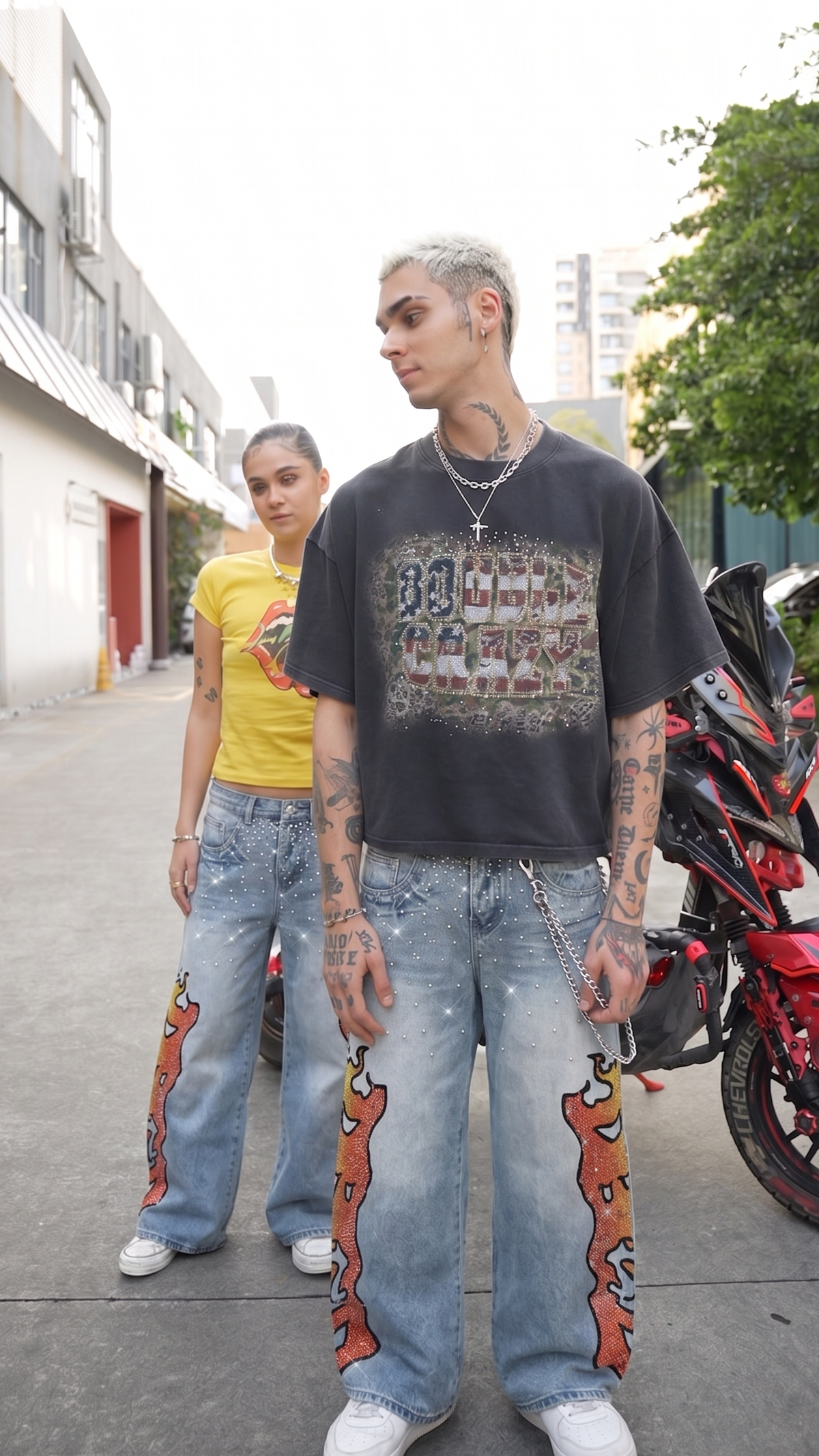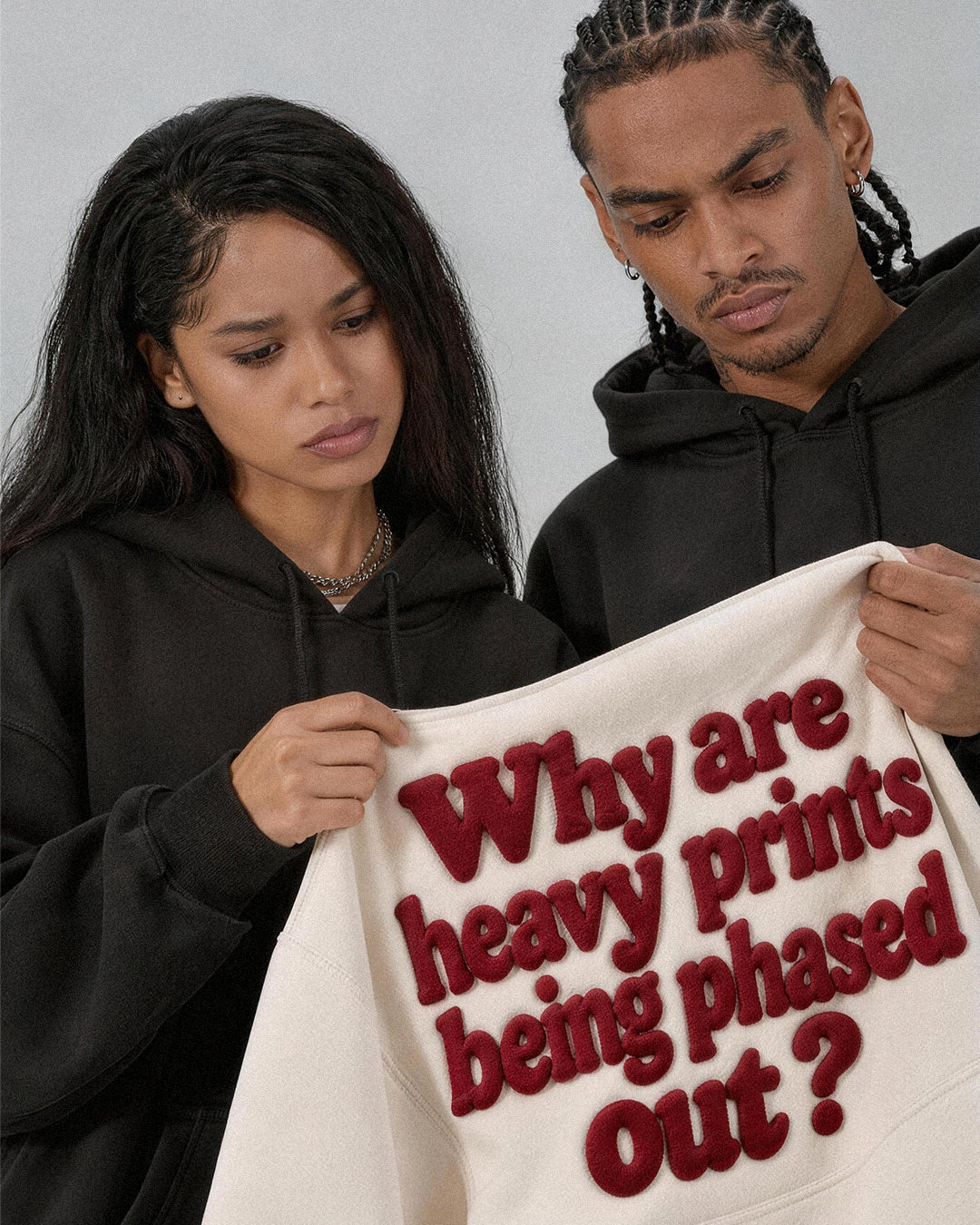
In 2026, heavy graphic prints have become a growing concern in the American vintage streetwear scene. Thick plastisol prints, high-build screen printing, and solid heat-transfer graphics are increasingly at odds with the relaxed aesthetic that defines modern streetwear. These techniques rely on layering ink to create thick, raised surfaces, but that extra weight can take away from the natural look and feel of vintage clothing. The heat transfer vs screen printing question is no longer only a printer's decision; it decides how a piece looks after its tenth wash.
As an affordable streetwear brand rooted in American vintage style, DoubleCrazy looks back to classic vintage techniques while moving away from conventional, heavy-print production methods. We use our own thin-ink, fabric-revealing print technique as an alternative to traditional screen printing and thick heat transfers. Designed for a wide range of pieces, from oversized unisex hoodies and heavyweight long sleeves to fitted Baby Tees. Our approach balances everyday comfort with authentic American vintage character.

What Makes Vintage Prints Look Authentic?
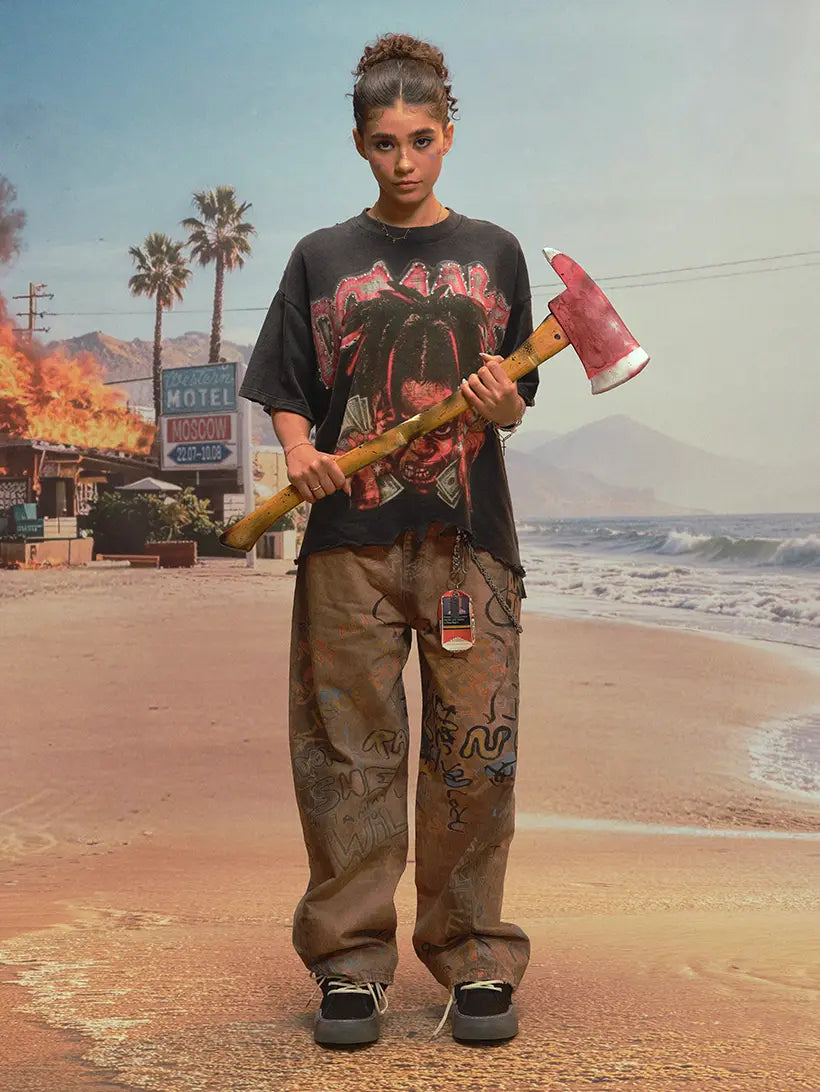
The essence of authentic vintage streetwear lies in the way the fabric and print come together. Instead of sitting heavily on the surface, the print should feel like a natural part of the garment, developing a relaxed, worn-in texture through washing and everyday wear.
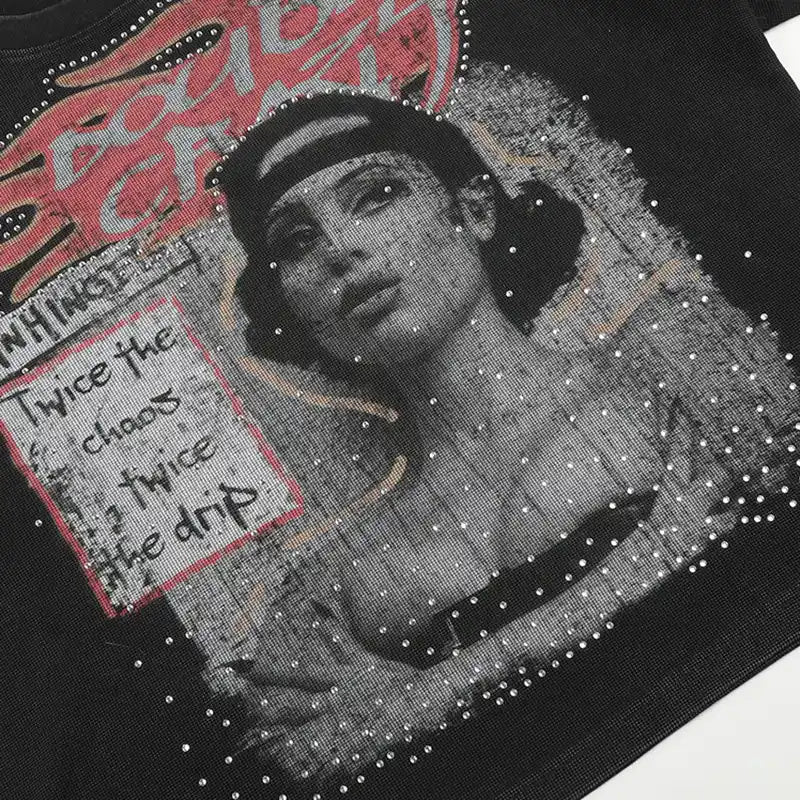
Many archival vintage pieces from the 1970s through the 1990s feature softer, thinner prints that allow the fabric's original texture to remain visible. This subtle combination of faded graphics, natural grain, and worn cotton is what gives vintage clothing its distinctive character.

By contrast, heavy screen prints and thick plastisol graphics often rely on an exaggerated, raised effect. The dense ink layer can feel disconnected from the fabric, hiding its natural texture and lacking the faded, lived-in appearance associated with vintage streetwear.
This overly industrial finish does not fit the relaxed, effortless spirit of vintage street culture. And that is why lighter, more natural-looking prints are becoming an appealing alternative.
The drawbacks of heavy prints generally fall into three areas: comfort, fit, and durability, all of which can affect whether a customer wants to wear and buy a garment again.

1. Comfort: Heavy Prints Can Feel Stiff and Restrictive
Thick plastisol prints can form a dense layer across the fabric, reducing breathability in the printed area. Whether applied to an oversized heavyweight hoodie, a long-sleeve shirt, or a fitted Baby Tee, the result can feel warm, stiff, or uncomfortable against the skin.
For clothing designed to feel relaxed and easy to wear, this extra stiffness can take away from the comfort that makes everyday streetwear appealing.
2. Fit: Extra Weight Can Affect the Silhouette
Heavy prints add weight to the garment. Over time, that extra weight can contribute to stretching or sagging in cotton fabric, potentially affecting the original silhouette and causing the hem or body to lose its shape.
Stiff print layers may also restrict the fabric's natural movement, making the garment feel less flexible during everyday activities. This can be especially noticeable in oversized streetwear, where the way a garment drapes is an important part of its overall look.
3. Durability: Cracking and Peeling Can Shorten a Garment's Life
Traditional heavy screen prints and solid heat transfers can be vulnerable to cracking, peeling, edge lifting, or separation after repeated washing, depending on the materials and application process.
When these problems appear too soon, they affect both the appearance and lifespan of the garment. A vintage-inspired piece should not only look good when it is new; it should also remain wearable as it becomes part of everyday life.
Heat Transfer vs Screen Printing: Why Both Heavy Methods Have Limits
From a garment-production perspective, no single printing method works equally well for every fabric, design, and silhouette. However, conventional heavy-print techniques can struggle to deliver the combination of texture, comfort, and flexibility that many modern vintage streetwear designs require.
High-build screen printing creates a pronounced, raised effect, but it can be difficult to reproduce the fine grain, faded colors, and worn textures associated with vintage poster graphics. Because the ink largely sits on the fabric surface, a thick or poorly cured print may crack or break down when the garment is stretched or washed.
Solid heat-transfer graphics can also create a plastic-like surface that limits breathability and flexibility. Depending on the transfer material and application, the film may lift or peel away from the fabric over time. This can make it less suitable for certain heavyweight washed fabrics or fitted garments that need to move naturally with the body.
For DoubleCrazy, the challenge is clear: how do we preserve the character of vintage graphics without sacrificing comfort and everyday wearability?
DoubleCrazy's Approach: Lightweight Prints with Vintage Character
To address these challenges, DoubleCrazy developed its own lightweight, fabric-revealing vintage print technique, inspired by the look and feel of classic American archival streetwear.
Rather than relying on thick layers of ink, our approach focuses on a softer finish that allows more of the fabric's original texture to show through. Designed for our range of vintage-inspired streetwear, it brings together the visual character of aged graphics with the comfort needed for everyday wear.

1. Natural Vintage Texture
Our approach uses a lighter ink application to help the print blend more naturally with the fabric, reducing the heavy surface feel associated with thick graphics.
The result is a softer visual texture with subtle grain and a worn-in appearance that complements the character of authentic vintage-inspired streetwear. Instead of looking overly polished or industrial, the graphics feel closer to the faded prints found on well-worn vintage pieces.
2. Lightweight Comfort for Everyday Styling
A softer print finish helps preserve the garment's natural drape and flexibility without adding unnecessary bulk.
Whether applied to oversized hoodies, heavyweight long-sleeve shirts, fitted Baby Tees, or cropped vintage-inspired pieces, the goal is the same: to let the garment retain its intended silhouette while remaining comfortable to wear.
From daily commutes to casual outings and streetwear styling, comfort should feel like a natural part of the design.
3. Built for Repeated Wear
A vintage look should not come at the expense of practicality. With appropriate ink selection, curing, and finishing, a well-developed print process can help graphics withstand everyday movement and repeated washing.
DoubleCrazy's approach focuses on balancing the character of vintage prints with the flexibility and durability needed for regular wear. The aim is to help reduce common issues such as cracking, peeling, and edge lifting while keeping each piece comfortable and visually distinctive.
Vintage Style Is About More Than the Print
Authentic vintage streetwear is not created by piling on thick ink or adding texture for the sake of appearance. It comes from finding the right balance between craftsmanship, fabric, graphics, and the culture behind the design.
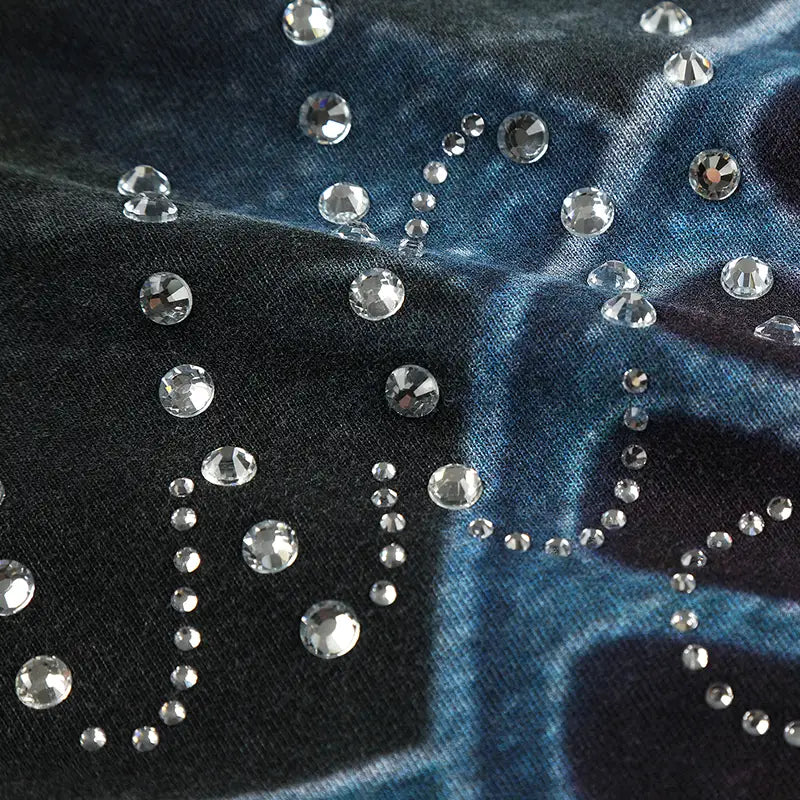
At DoubleCrazy, our lightweight vintage printing approach is part of that philosophy. By moving away from unnecessarily heavy print finishes, we aim to create pieces that combine authentic vintage character, everyday comfort, and lasting wearability. The same thinking runs through our washed and distressed finishes and the rhinestone details that sit on top of them.
Great streetwear should feel as good as it looks, and the best vintage-inspired pieces are the ones you keep reaching for. See what just landed in new arrivals.